
What Does DERV Stand For?
DERV is an abbreviation for ‘Diesel Engine Road Vehicle’ and is the term commonly used for standard diesel supplied for road use. Better known simply as diesel, DERV powers cars, vans, lorries and other diesel-engined road vehicles, while the same white diesel fuel can also be used in many types of machinery and equipment.
DERV works in a compression-ignition engine, more commonly known as a diesel engine. Unlike a petrol engine, diesel engines compress air inside the cylinder until it reaches a high enough temperature to ignite the injected fuel.
You may also see DERV referred to as white diesel, road diesel, road DERV or ultra-low sulphur diesel (ULSD). Despite its widespread use, there can still be confusion around DERV terminology, taxation, price, storage and how it differs from other diesel fuels.
Crown Oil is a leading bulk DERV supplier with over 75 years of experience supplying UK businesses with millions of litres of diesel every year, so our fuel specialists are well placed to explain these topics and more throughout this guide.

DERV vs Diesel
DERV and road diesel are essentially the same product. In the UK, DERV is the term traditionally used for diesel supplied for use in road vehicles, while most people simply refer to it as diesel.
You may therefore see the same fuel described as:
- DERV
- Diesel
- White diesel
- Road diesel
- Road DERV
- Ultra-low sulphur diesel (ULSD)
The different names can make diesel terminology seem more complicated than it really is. In most commercial fuel-supply contexts, DERV, white diesel and road diesel all refer to the standard duty-paid diesel used in diesel-engined road vehicles.
DERV and diesel are not the only fuel names that can cause confusion. Red diesel and gas oil are also commonly used to describe the same rebated fuel, although red diesel is marked and dyed to distinguish it from standard white road diesel.
Buying DERV in Bulk
If you’re looking to buy DERV in bulk, you will need to order from a specialist fuel supplier with the capacity to meet your required delivery volume.
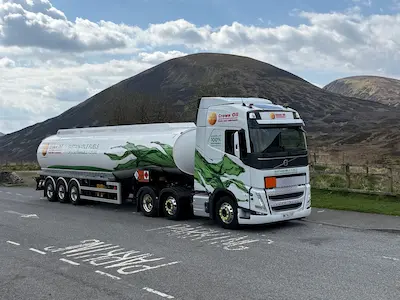
Crown Oil has been a leading UK supplier of DERV for over 75 years, delivering in quantities ranging from 205-litre barrels up to 36,000 litres or more to meet your requirements.
Thanks to our strategically placed fuel depots across the UK, we offer some of the fastest DERV delivery times in the industry, with a 24-48 hour fuel delivery service as standard. We can even deliver your diesel within just a few hours via our emergency fuel delivery service.
How much does DERV cost?
DERV prices fluctuate in line with changes in global oil markets, exchange rates, supply and demand and wider geopolitical events, so it is not practical to publish a fixed bulk diesel price.
The price you pay can also vary depending on your delivery location and the quantity of fuel required.
As a leading national DERV supplier with substantial buying power, Crown Oil offers competitive bulk diesel prices across the UK. Call our fuel specialists for a no-obligation DERV quote.
How is DERV taxed in the UK?
DERV carries a VAT rate of 20%. Vehicles with lower emissions, such as liquefied petroleum gas (LPG), compressed natural gas (CNG) and electric vehicles, are taxed at lower duty rates.
UK fuel duty is currently 52.95 pence per litre for diesel.
| Fuel type (road fuel) | Fuel duty | *Rates from 23 March 2022 |
|---|---|---|
| Ultra-Low Sulphur Diesel | 57.95 ppl | 52.95 ppl |
| Ultra-Low Sulphur Petrol | 57.95 ppl | 52.95 ppl |
| Bioethanol | 57.95 ppl | 52.95 ppl |
| Biodiesel | 57.95 ppl | 52.95 ppl |
| Liquefied petroleum gas | 31.61 p/kg | 28.88 p/kg |
| Natural gas | 24.7 p/kg | 22.57 p/kg |
| Electricity | 0.0 p/kWh |
DERV has similar properties to gas oil (red diesel), so it’s important to know the rules and differences in tax rates. Red diesel is currently a rebated fuel, so it has a much lower tax rate of 5% for volumes below 2,300 litres.
However, the Chancellor announced at the 2021 Budget that many industries would lose their eligibility to use red diesel from April 2022. Businesses within the affected industries then switched to using standard DERV fuel or HVO fuel. You can learn more about the changes in red diesel tax in our article.
How can I store DERV and other fuels safely?
If you’re storing any fuels on-site, whether that be DERV or any other fuels and oils. They should be kept in a dedicated storage tank that’s located in a cool and dry place. This is to help prolong their shelf life and reduce the risk of contamination.
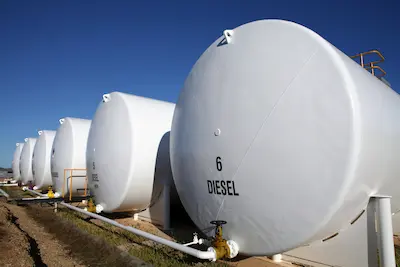
Permanent onsite storage steel tanks are commonly used to store diesel, or portable 45-gallon drums if fuel users need to easily transport DERV or don’t have the fixed storage facilities.
There is actually a legal limit on how much DERV you can store, as it presents a risk to both yourself and the environment. When handled incorrectly, it’s a dangerous and highly flammable substance. Different regulations apply depending on where you’re storing DERV, how much you’re storing and what you’re using the fuel for.
Read more on this in our dedicated oil tank storage regulations guide.
How long can DERV be stored in a storage tank?
With good tank maintenance and the storage conditions discussed above, DERV can be stored for between 6 and 12 months. If you’re storing diesel for any longer, it’s important to invest in regular fuel testing by a professional company to help reduce the risk of contamination.
How does diesel fuel become contaminated?
Diesel fuel contains 7% FAME (Fatty Acid Methyl Esters) as it’s a practical necessity for suppliers to meet their RTFO obligations. However, this makes DERV highly vulnerable to microbial attack (contamination) when in storage.
FAME is hygroscopic and attracts water, which creates the perfect breeding conditions for diesel bug, sludge, and biomass to grow. This significantly reduces the quality of DERV and leads to clogged filters and engine breakages.
How is contaminated diesel fuel treated?
At Crown Oil, we offer fuel polishing services to customers when their stored diesel has only a small amount of contamination in it. Fuel polishing essentially cleans diesel using a fixed polishing unit and can be done with little to no disruption in your operations.
However, if diesel is highly contaminated with diesel bug, then fuel polishing will not be suitable. So instead, our specialist team may suggest uplifting your fuel and replacing it with a new DERV fuel, which can be delivered straight into your tank. Our specialists would usually conduct a tank clean too to remove any sludge or biomass that has accumulated when storing contaminated DERV.
What should I do after a fuel or oil Spill?
If your diesel or any other type of fuel or oil has spilt or leaked from your oil storage tank, you must act fast. If it’s only a small amount of oil, you can use a spill kit to help contain it. If you use fuel storage tanks and do not currently have a spill kit, Crown Oil can supply spill kits, as well as a wide range of additional ancillary products to help with the safe storage and handling of fuels.
If the diesel or other oil spill cannot be contained using a spill kit. You must contact an oil spill specialist as soon as possible to help avoid further damage to the environment and to prevent harming wildlife or anyone nearby. Oil spills can cost tens of thousands of pounds in remedial and legal implications.
Crown Oil’s sister company, Crown Oil Environmental, specialises in emergency fuel and oil spill response and can come to your rescue straight away. If you suspect an oil spill or other issues with your fuel storage tank, call our environmental fuel specialists right away for advice and help.
What sustainable alternatives are there to diesel fuel?
For instance, if you’re looking for an alternative to diesel for your diesel engine vehicle fleet. HVO fuel (Hydrotreated Vegetable Oil) is a 100% renewable diesel fuel that’s produced from fully renewable and sustainable materials such as vegetable oils. As a paraffinic diesel fuel, it is virtually chemically identical to DERV, so it can be used as a drop-in alternative without engine modification or additional infrastructure.
Using HVO fuel in place of DERV offers many benefits, including:
- 100% renewable, sustainable and biodegradable
- Reduces up to 90% of net CO2 emissions
- Reduces notifiable NOx, CO and PM emissions
- Up to 10-year storage life
- Can be used as a direct diesel replacement
- Year-round performance
- FAME and ester-free
- Odourless, and free from aromatics, sulphur and metals
If you have further questions regarding DERV, our team of diesel experts will be happy to answer any other questions you may have. Call us today on 0330 123 1444 to get your questions answered.